

We offer you and your projects’ partners a win-win solution based on a solid, long-lasting, fruitful relationship
You outsource the mundane & concentrate on what you do best
This article is part of a series in which we examine the differences between Modular and Prefabrication in Construction.
Prefabrication and modular Construction are no longer peripheral ideas in the Construction industry. They are becoming serious strategies for owners, designers, contractors, and manufacturers who want to build faster, safer, more sustainably, and with greater cost certainty.
The benefits are clear. Modular Construction can reduce costs, shorten project schedules, improve quality, support Sustainability, and strengthen Safety performance. However, these benefits do not happen automatically. Prefabrication and modular Construction require early planning, disciplined Collaboration, robust information management, and a clear methodology that integrates design, manufacturing, logistics, assembly, and operations.
In traditional Construction, many decisions can be adjusted during the Construction phase. In modular Construction, this flexibility is reduced because significant parts of the building are manufactured offsite before they arrive on the project site. It means that teams must make better decisions earlier. They must coordinate design, engineering, procurement, fabrication, transportation, site preparation, and installation as one integrated process.
It is where digitalization becomes essential.

Information Management, formerly known as Building Information Modeling, plays a central role in prefabrication and modular Construction. It allows project teams to create, manage, share, and verify structured information throughout the project lifecycle.
For modular Construction, this is especially important because the project depends on precision. Modules must be designed to fit together, meet regulatory requirements, support structural performance, accommodate mechanical and electrical systems, and arrive on-site in the correct sequence.
Information Management helps teams move away from fragmented drawings, spreadsheets, emails, and disconnected documents. It creates a shared digital environment where owners, architects, engineers, contractors, manufacturers, and suppliers can coordinate their work before physical Construction begins.
The main value of Information Management in modular Construction can be seen in three areas: visualization, simulation, and problem detection.
Modular Construction requires that everyone understand the project early on. A well-developed information model gives owners and stakeholders a visual representation of the building before manufacturing and site assembly begin.
The visual representation helps teams test design alternatives, review layouts, understand spatial relationships, and align expectations.
Visualization reduces misunderstanding. When all stakeholders can see the same model, they are more likely to identify issues early and agree on the best solution before the project becomes expensive to change.
Information Management is not only a design tool. It also supports simulation.
Through simulation, teams can test how the building will perform under different conditions. They can evaluate materials, energy performance, Construction sequencing, logistics, Safety risks, and operational requirements. For modular Construction, this is critical because manufacturing and site preparation often occur simultaneously.
Four-dimensional simulation, which connects the model to time and scheduling data, helps project teams visualize how Construction will unfold. It supports better sequencing, identifies potential conflicts, and improves coordination between factory production and site readiness.
For example, the site may be prepared while modules are manufactured offsite. If the schedule is not properly coordinated, modules may arrive before the site is ready, causing storage problems, delays, and additional costs. Simulation helps reduce this risk by allowing teams to plan the project sequence before execution.
One of the strongest benefits of Information Management is the ability to detect problems early.
In modular Construction, errors can be costly because factory production depends on accurate information. A design clash, dimensional inconsistency, missing requirement, or late design change can disrupt manufacturing, transportation, and installation.
Model checking and verification tools help teams identify issues before fabrication begins. They can detect clashes between architectural, structural, mechanical, electrical, and plumbing systems. They can also verify whether the model meets owner requirements, project specifications, and regulatory expectations.
This early problem detection reduces rework, improves cost control, and strengthens project quality.

When applied correctly, Information Management improves modular Construction in several ways.
Because all stakeholders work from shared, coordinated information, the team can reduce delays caused by miscommunication, incomplete data, and delayed design clarification.
Teams can evaluate different design and Construction options before committing to production. They can identify the most feasible and cost-effective solution, resolve design clashes early, and avoid expensive rework during Construction.
By reviewing the building digitally before it is manufactured, teams can identify areas that require optimization. They can improve Safety, performance, maintainability, and compliance before the project moves into production.
These benefits explain why Information Management is becoming increasingly important in modular Construction. Modular projects depend on repetition, accuracy, and coordination. Information Management provides the structure needed to support all three.

Not every building element is equally suited to modularization. Teams must decide early which parts of the project can be prefabricated and which should remain site-built.
Several types of modular and prefabricated systems can be considered.
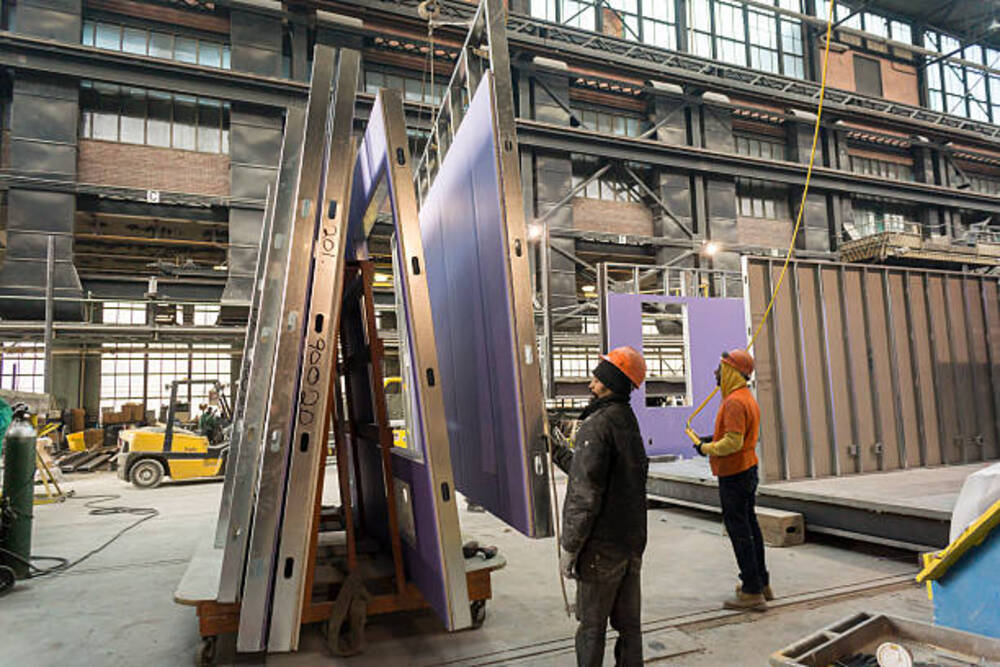
Panelized systems are flat assemblies, often used for walls, roofs, and floors. Volumetric modular systems are three-dimensional units that create complete spaces or rooms. Structural elements and sub-assemblies can also be prefabricated when they are suitable for manufacturing and transportation.
The more standardized, consistent, and repetitive the design dimensions are, the greater the opportunity for prefabrication.
Standardization allows manufacturers to produce components more efficiently, improve quality control, reduce waste, and repeat successful solutions across multiple projects.
However, standardization does not mean eliminating design quality. It means designing with manufacturing, assembly, transport, and lifecycle performance in mind.

Successful modular Construction requires more than technology. It requires the right process.
Current Construction practices often do not fully support modular Construction because project delivery remains fragmented. Designers, contractors, manufacturers, and owners may work in separate systems, use different information, and make decisions at different times. It creates risk.
To support modular Construction, teams must define clear workflows that connect design, engineering, manufacturing, procurement, logistics, site work, and installation. They must also clarify roles and responsibilities so that each stakeholder understands how their decisions affect others.
The architectural, structural, mechanical, electrical, and plumbing disciplines are especially important because modular Construction requires close coordination between spatial design, structural stability, building services, and manufacturing constraints.
A strong modular methodology should include planning, scoping, contracting, scheduling, tracking, and verification.
Planning must begin early. Traditional execution plans are often produced but not actively used. Modular Construction requires a more practical and collaborative planning process.
Teams should define how information will be created, exchanged, approved, and verified. They should also establish templates, responsibilities, digital workflows, and decision points. Early planning helps prevent confusion later when the project moves into fabrication and assembly.
Scoping is essential because modular Construction depends on accurate and complete information.
Teams must define the required geometry, documentation, specifications, performance data, and owner requirements. The scope should also align with recognized information management standards, such as ISO 19650, so that project information is structured, consistent, and usable.
A clear scope helps prevent information gaps. It ensures that the model contains what manufacturers, contractors, owners, and operators need at each stage of the project.
The Construction industry runs on contracts, and modular Construction requires contracts that support Collaboration rather than fragmentation.
Contracts should clarify responsibilities for design coordination, model Development, fabrication information, quality control, transportation, site installation, and change management. They should also define how digital information will be used, who is responsible for it, and how decisions will be approved.
Without clear contractual alignment, modular projects can suffer from disputes, delays, and unclear accountability.
Scheduling is one of the most important methodologies in modular Construction.
Unlike traditional Construction, modular Construction often involves concurrent activities. While site work progresses, modules or components are manufactured offsite. It can significantly reduce the total project duration, but only if the schedule is carefully coordinated.
Teams must understand production lead times, transportation constraints, site readiness, crane availability, utility connections, inspections, and installation sequences. A collaborative schedule helps reduce coordination issues and ensures that factory production and site preparation support each other.
A lean approach to project management supports modular Construction because it focuses on continuous delivery, coordination, and improvement.
Tracking helps teams monitor whether design information, procurement, fabrication, logistics, and site work are progressing as planned. Digital dashboards, model-based tracking, and collaborative platforms can help teams identify delays or risks early.
It allows project teams to act before small problems become major disruptions.
Verification is critical in modular Construction.
Teams must confirm that what was planned is what gets manufactured and installed. It requires a connection between the information model, owner requirements, quality standards, manufacturing data, and site inspections.
Verification helps ensure that the final building meets the agreed requirements. It also supports quality control, reduces rework, and strengthens trust between the owner, designers, contractors, and manufacturers.

One of the most important methodologies for modular Construction is Design for Manufacturing and Assembly, often called DFMA.
DFMA means designing buildings so that components are easier to manufacture, transport, assemble, inspect, maintain, and reuse. It encourages teams to simplify assemblies, reduce unnecessary variation, standardize dimensions, improve production efficiency, and make installation more predictable.
It reduces time to market by allowing production to begin earlier and progress more efficiently. It lowers total production effort by simplifying parts and assemblies. It improves manufacturing quality by reducing complexity. It also makes final assembly faster and more reliable.
DFMA requires designers to think differently. Instead of designing only for appearance or performance, they must also design for fabrication, logistics, installation, maintenance, and long-term use.
Standardization is one of the strongest enablers of modular Construction.
Standardized modules, dimensions, details, and connections allow manufacturers to repeat processes, improve quality, reduce waste, and accelerate production. Repetition also supports workforce training and automation, as teams can improve through repeated practice.
However, standardization must be balanced with flexibility. Owners still need buildings that respond to their operational needs, site conditions, and user expectations. The best modular strategies standardize the parts that benefit from repetition while allowing flexibility where the project requires it.
The Hilda L. Solis Care First Village in downtown Los Angeles shows how modular Construction can support urgent social and economic needs.
The project was developed to provide interim housing and included 232 units. It used modular components to accelerate delivery, reduce labor requirements, and respond quickly to the housing affordability crisis.
The project demonstrated one of the strongest advantages of modular Construction: speed. While site work was underway, building modules could be manufactured in a controlled factory environment. This allowed the project to compress the overall schedule and move from concept to occupancy much faster than many traditional Construction approaches.
The economic case was also significant. The cost per unit was reported at approximately $245,000, compared with an average of about $535,000 per unit in California at the time. This kind of difference shows why modular Construction attracts interest from owners seeking faster delivery, better cost control, and scalable solutions.
The project also illustrates a broader point. Modular Construction is not only a technical method. It can also become a strategic response to housing shortages, public-sector delivery challenges, and social infrastructure needs.

The future of modular Construction will depend on how well the industry connects design, manufacturing, Construction, and operation.
Offsite Construction can increase flexibility, reduce waste, improve material efficiency, and create economies of scale. It can also support large-volume housing production at a lower cost when projects are designed correctly.
Wood, steel, and hybrid systems will continue to play important roles. More architectural firms are also incorporating modular Construction into their design offerings. As this happens, the best results will come from projects that adopt modular thinking early.
Owners and project teams should not wait until the design is complete before considering modular options. By then, many opportunities may already be lost. Modular concepts must be considered before the building form is finalized.

An information model approach can strengthen modular Construction by connecting the digital representation of the building to detailed information about materials, components, assemblies, and performance requirements.
A detailed bill of materials can help teams understand which materials are required, how much will be needed, the total material cost, and where opportunities exist to reduce waste or avoid change orders.
This level of detail also supports factory production. When manufacturers understand exactly what must be built before the production line begins, they can improve quality control, reduce delays, and make better decisions earlier.

One of the remaining challenges in modular Construction is the lack of fully integrated software that connects information management tools to manufacturing, coordination, procurement, logistics, and factory production.
Many current tools were designed for traditional design and Construction workflows. Modular Construction requires stronger connections between design models, manufacturing models, bills of materials, production schedules, and installation planning.
As modular Construction grows, the industry will need better digital platforms that support the complete workflow from design through fabrication, assembly, and operation.
Conclusion
Prefabrication and modular Construction can help the Construction industry build faster, more safely, more sustainably, and with better cost certainty. However, they require a different way of thinking.
The greatest benefits come when modular concepts are introduced early, before the building form is fixed and before major design decisions limit the available options. Owners, designers, contractors, manufacturers, and suppliers must work together from the beginning.
Information Management provides the foundation for this Collaboration. It supports visualization, simulation, problem detection, scheduling, verification, and lifecycle coordination. DFMA strengthens the connection between design and manufacturing. Lean tracking improves delivery. Clear scoping, contracting, and verification reduce risk.
Modular Construction is not simply a faster version of traditional Construction. It is a more integrated delivery method. It shifts work from the site to the factory, moves decisions earlier in the project, and requires a stronger connection between digital information and physical production.
For owners, the message is clear: modular Construction can create real value, but only when supported by the right methodology. The future belongs to organizations that can combine standardization, digitalization, Collaboration, and disciplined planning into one coherent Construction process.
Driving Vision's technology appraisal looks at the best way to insert new technology in your workflows and how to move your organization to cloud computing so you can open up new possibilities for your daily planning tasks and make sure your data never leaves the optimally secured data center.
A Driving Vision expert will conduct the interviews online and discuss the issues and our findings in the report. Together, we will decide on the best way to implement the solutions at your pace and within your budget. Are you ready to experience the future of Construction management? Give us a call.
Implementing BIM can be daunting, but Driving Vision is here to help you at the pace you are comfortable with. Get started by getting in touch now

We act as your BIM coordinator

We Support your BIM IT

We Train & Coach you

We Innovate in Technology
We offer you and your projects’ partners a win-win solution based on a solid, long-lasting, fruitful relationship
You outsource the mundane & concentrate on what you do best